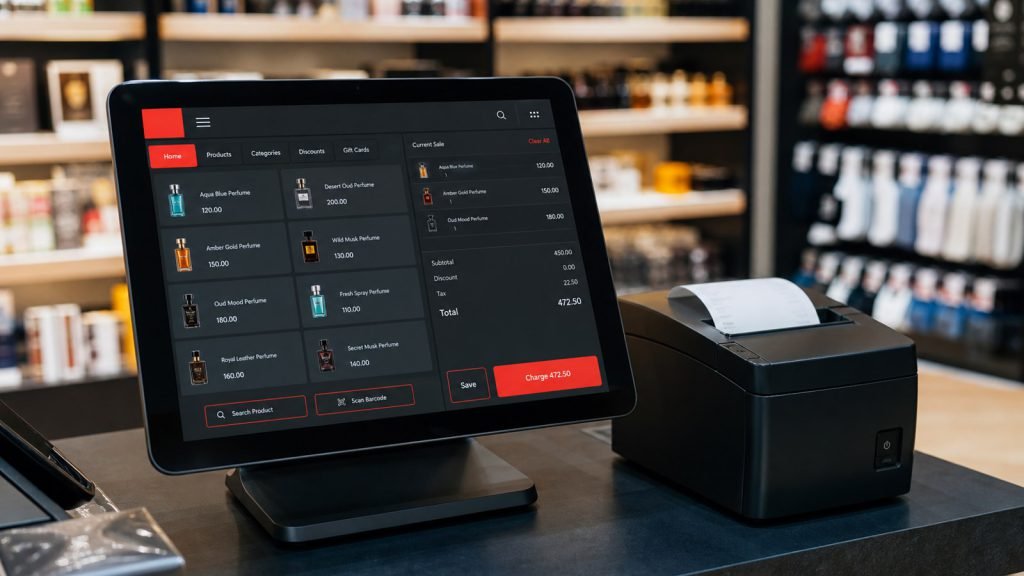
ElintOm retail software exists so POS, inventory, customers, and online orders share one view—instead of Excel plus a separate till plus marketplace seller central. Multi-branch UAE stores lose hours every Monday reconciling three “truths.” The till said 40 units. The sheet said 28. Noon said 12 available. None of those numbers paid rent.
ElintOm is the POS and ops layer in that picture. This comparison is for operators tired of exporting CSVs—not a feature brochure. If online tickets already outrun the pack bench, read retail ops online orders next.
What ElintOm retail software actually owns
If a tool cannot post a Sharjah till sale, decrement the same SKU, attach a phone number, and show a web or WhatsApp order on the same screen, it is not ElintOm retail software. It is another silo. The jobs are:
- One basket at the counter, with VAT on the same ticket.
- Stock that moves when the sale moves—including click-and-collect.
- One customer record across branches, not a new walk-in every visit.
- Online and marketplace orders in the same queue the floor already uses.
- A Monday dashboard a manager can read without a data intern.
Scattered tools fail those five jobs by design. Each vendor optimises its own login. ElintOm retail software is built so growth work and operations stop arguing over different numbers.
Excel + POS + seller central: the weekly tax
A three-branch pharmacy group (Sharjah, Ajman, Deira) ran a Chinese till in-store, a Google Sheet for expiry, and Amazon.ae plus Noon in two seller accounts. Every Sunday night a supervisor copied quantities. By Tuesday the sheet was fiction. ElintOm retail software would not have made them “more digital.” It would have removed the copy step that created oversells.
Scattered stacks also split customers. The till never sees the Noon buyer. The marketplace never sees the loyalty phone. Staff then ask for the number again, and the shopper feels like a stranger. A POS loyalty program cannot survive that split.
Multi-branch UAE: one record or three ghost shops
Mall hours differ. Staff rotate. A SKU that is dead in City Centre Ajman may still sit in Al Nahda. ElintOm retail software has to show branch-level stock without forcing a manager to open three apps. Transfer should be a ticket, not a WhatsApp voice note.
If Branch B can sell Branch A’s last unit without a transfer, you will refund. If Branch A hides stock “for walk-ins” while ads still show available, you will refund. The software must make hiding expensive and visible.
Online orders inside the same queue
Web and WhatsApp tickets that land in a Gmail label are how packing delays start. ElintOm retail software should print or screen those orders next to walk-in baskets so the same person picks. Separate “ecommerce staff” who only exist on Instagram hours will miss Friday peaks.
Payment capture still needs a clean gateway. Swasthe’s payment partner is uTap. The POS should see paid status, not a screenshot of a bank SMS. Marketplace payouts remain in seller central—but available-to-sell must still come from the same inventory ElintOm retail software decrements in-store.
What scattered tools still win (and when to keep them)
Keep a marketplace account. Keep a courier portal. Keep Excel for one-off supplier negotiations. Do not keep Excel as the stock ledger. ElintOm retail software is the ledger. Everything else is a channel or a carrier.
If you already have a till the cashiers trust, the question is whether it can absorb online tickets and a shared customer. If it cannot, you are paying for two systems plus a human glue layer. That glue layer quits in Ramadan.
Selection checks before you migrate
- Can a cashier in Muweilah see Ajman qty without a phone call?
- Does a Shopify or WhatsApp paid order lock the unit immediately?
- Can you pause a SKU on the site when the shelf hits a floor?
- Is the customer phone the same ID for till, web, and loyalty?
- Can finance export VAT tickets without a vendor ticket?
- Does the Monday view show stockouts caused by ads, not just “sales”?
Score vendors on those six. Ignore dashboard skins. ElintOm retail software should pass them because the model is one ops core—not a mashup of exports.
Worked example: wellness Al Nahda + Muweilah
Two wellness counters sold the same magnesium line. Al Nahda packed website orders from a back room. Muweilah sold walk-ins from a glass cabinet. The website used Muweilah’s quantity because someone pasted it once. Weekend ads sold 30 units that only existed on the sheet. That is the scattered-tools tax.
They moved catalogue, till, and web orders into ElintOm retail software. Transfers became tickets. The website read Al Nahda as the fulfilment node for courier and Muweilah for pickup. Oversells dropped. The owner stopped refereeing Instagram comments about “out of stock after payment.”
FAQ: ElintOm retail software
Is ElintOm retail software a marketplace replacement?
No. Amazon and Noon stay. ElintOm retail software is the store system that should feed available-to-sell, not a second catalogue you forget to update.
Do we rip out the current till on day one?
Only if the till cannot share stock and customers. Swasthe will not stage a heroic cutover for sport. We map the leak first.
Can clinics use it?
Clinics need appointments more than SKU bins. Retail and pharmacy floors need ElintOm retail software because the unit on the shelf is the product.
Where does Swasthe fit?
We grow the demand and keep ops honest. Ads without ElintOm retail software is how you pay to oversell. Software without demand is a quiet shop with a nice login.
See the product path on ElintOm. If you want the till, the site, and the Monday numbers in one conversation, that is where we start.
Permissions, shifts, and the shared-PIN problem
Scattered tools train teams to share passwords. The sheet is “owned” by whoever has the link. The till PIN is on a sticky note. ElintOm retail software should use named logins. Disable ex-staff the same day. Review voids and stock adjustments every Monday with the same seriousness as cash variance.
If adjustments are free and unlogged, your inventory will always lose to a confident cashier. The system is only as honest as the permission model.
Marketplaces: seller central is not your warehouse
Seller central will always have its own order screen. That does not make it the warehouse. Push availability from ElintOm retail software on a schedule you can defend. When a Noon order lands, decrement the same bin the Sharjah till uses. If you cannot do that, pause ads on that SKU. Grow online sales only as fast as the bin is real.
What to stop doing this month
Stop weekly quantity pastes. Stop a second customer list in an email tool that never sees the till. Stop letting Instagram DMs create orders that never hit stock. ElintOm retail software will not fix those habits by existing. You still need an owner. The software removes the excuse that “the numbers live in different places.”
For a loyalty loop that uses the same phone, keep points on the POS—not in a sidecar app. ElintOm retail software plus a simple earn/redeem rule beats a pretty wallet that cashiers skip.
How Swasthe sequences the change
Audit the leaks (oversell, split customers, packing delay). Build the catalogue and branch bins. Connect WhatsApp and web paid status. Then grow ads. That is Audit, Build, Connect, Grow. ElintOm retail software sits in Build and Connect. Media sits last on purpose.
Google’s Merchant Center help is useful if you also feed Google Shopping—but the feed is only as honest as the ops core. A pretty Shopping listing on a lying quantity is still a refund.
Mall Wi-Fi, offline tills, and the lunch-hour freeze
City Centre and Sahara Centre Wi-Fi drops. A till that cannot park a ticket offline will invent a paper sale that never hits stock. ElintOm retail software should queue the basket and sync when the line returns—without creating a duplicate customer. Scattered tools fail here: the sheet is “updated later,” which means never.
Train a 60-second fallback: complete the sale, write the SKU on a numbered pad, enter it before the next peak. If ElintOm retail software is down for more than ten minutes, the floor lead owns the pad. Do not let five cashiers invent five pads.
Expiry, batches, and pharmacy floors
Wellness and pharmacy SKUs die on dates, not only on counts. Excel “expiry tabs” are where short-dated stock hides until a customer finds it. ElintOm retail software should warn at pick and at till, not in a monthly email. If you cannot block a near-expiry unit from an online promise, pause that SKU on the site.
A Muweilah pharmacy that still uses a highlighter on boxes is not “careful.” It is unscalable. Move batch to the same record as qty. Ads have no business running on a lot that expires in nine days unless you mark it as a clearance path with honest copy.
The glue person is a hidden SKU cost
Somebody already reconciles the three systems. Count their hours. ElintOm retail software is cheaper than a supervisor’s Sunday night plus the refunds from the mistakes they miss. If that person goes on leave, scattered tools stop. Design for their week off, not for their heroics.
Put a name on exceptions: voids, negative stock, and unpaid WhatsApp invoices. Review them in the same Monday huddle as cash. Software without that habit is just a quieter spreadsheet.